


Welcome to Cycjet. Professional manufacturer of intelligent inkjet coding and laser marking machines
Welcome to Cycjet. Professional manufacturer of intelligent inkjet coding and laser marking machines
Industry Background: Labeling Challenges Under New Auto Parts Traceability Regulations
With the implementation of new regulations in the auto parts industry, such as the "Technical Requirements for After-Sales Service Capabilities of New Energy Vehicles" (JT/T 1548-2025), the traceability of auto parts throughout their entire lifecycle has become an industry necessity. As a critical safety component of automobiles, wheel hubs (steel rims) must meet the following marking requirements:
1.Permanent wear resistance, adaptable to harsh conditions such as high temperatures, oil contamination, and friction
2.High-precision QR code/serial number, supporting one-item-one-code traceability
3.Compliance with environmental regulations, with no volatile organic compound emissions
4.Adaptability to large workpieces, supporting flexible in-situ operation on the production line.
Traditional inkjet printing methods are no longer sufficient to meet these requirements, and auto parts companies urgently need technological upgrades.
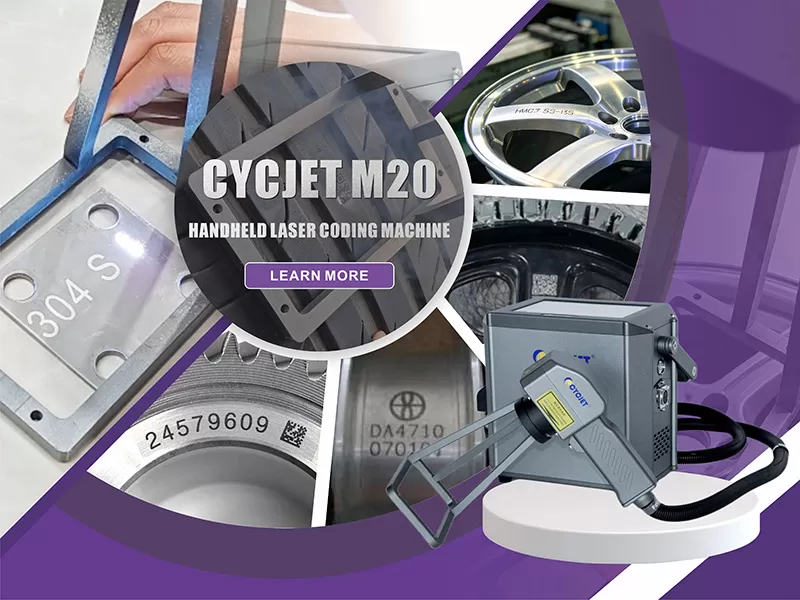
Key Pain Points of Traditional Coding Methods in Wheel Hub Marking
Historically, the manufacturing and distribution stages of wheel hubs have frequently relied on Continuous Inkjet (CIJ) printers or handheld Thermal Inkjet (TIJ) printers for product marking. However, in actual production environments, these traditional methods have presented enterprises with numerous challenges:
Easily Erased, Difficult to Trace—Incapable of Serving as a "Permanent ID"
During subsequent processing, transportation, or warehousing, wheel hubs are frequently exposed to cutting fluids and rust inhibitors, or subjected to wind and rain. Ink-jet markings adhere solely to the surface of the metal or its coating; consequently, they are highly susceptible to blurring or peeling off due to friction, chemical cleaning, or harsh environmental conditions. Once the product identification is lost, the item forfeits its traceability compliance—making it highly likely to be rejected by the vehicle manufacturer.
Consumable costs are like a bottomless pit, and subsequent maintenance is cumbersome.
Inkjet equipment requires a continuous supply of ink cartridges, thinner, and cleaning fluid. Furthermore, in dusty workshops, the ink system and printheads are prone to clogging. Frequent downtime for maintenance not only delays production but also increases labor and time costs on the production line.
Unable to escape the "cable shackles," heavy steel rims are difficult to move.
Inline inkjet marking relies on conveyor belts to transport rims to fixed workstations. For large truck rims or heavy wheels, frequent handling easily causes damage. Even ordinary handheld inkjet printers often require dragging long power cords, which is neither flexible nor safe in the complex automotive parts production workshops.
Why should the auto parts industry choose the CYCJET M20 handheld laser printer?
Addressing the pain points mentioned above, the CYCJET M20 handheld laser printeroffers a "wireless, green, and physically permanent" marking solution tailored for the wheel industry:
Giving Wheel Hubs a "Lifetime Identity Card": The M20 uses a high-quality 1064nm wavelength fiber laser to perform micron-level physical etching on the wheel hub surface. The marked QR codes and logos have extremely high contrast, are resistant to acids and alkalis, wear, and oil stains, truly achieving full lifecycle traceability.
Truly Industrial-Grade Wireless with Ultra-Long Battery Life: The M20 has a built-in 24V high-performance lithium battery power system, completely eliminating the need for external power cords and bulky control cabinets. A single charge provides 12-16 hours of continuous operation, allowing operators to carry the device directly to the finished product warehouse or outdoor storage area for marking.
Lightweight Design, Handheld Components Weigh Only 1.25 kg: The entire machine, including the control box, weighs only 6.00 kg, conforming to ergonomic principles. Even frontline workers will not experience fatigue during long periods of one-handed operation and multi-angle marking.
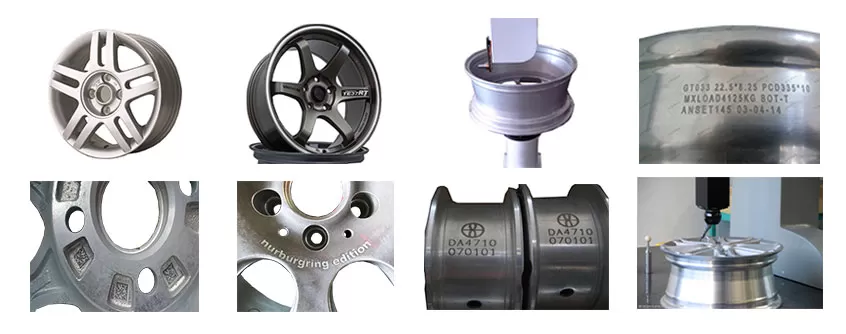
Comparison of CYCJET M20 and traditional inkjet printing methods
Summary: CYCJET Facilitates the Intelligent Upgrade of the Auto Parts Industry
In the automotive parts industry—where demands for product quality and supply chain traceability are nothing short of exacting—a clear, indelible, and compliant marking serves as a company's ultimate badge of credibility.
Leveraging its exceptional fiber laser technology, the CYCJET M20 handheld laser printer has decisively resolved the critical shortcomings inherent in traditional inkjet marking: high consumable costs, susceptibility to erasure, and difficulties in mobile operation. If you are currently plagued by issues such as illegible markings on wheel rims, cumbersome handling processes, or exorbitant consumable expenses, the CYCJET M20 is undoubtedly the optimal solution to help you reduce costs, boost efficiency, and step into the era of intelligent traceability.
Welcome to the official CYCJET website! Visit us to learn more about the detailed specifications of the CYCJET M20 handheld laser printer, or contact our application engineers to receive a complimentary sample marking solution for wheel hubs.
About CYCJET:
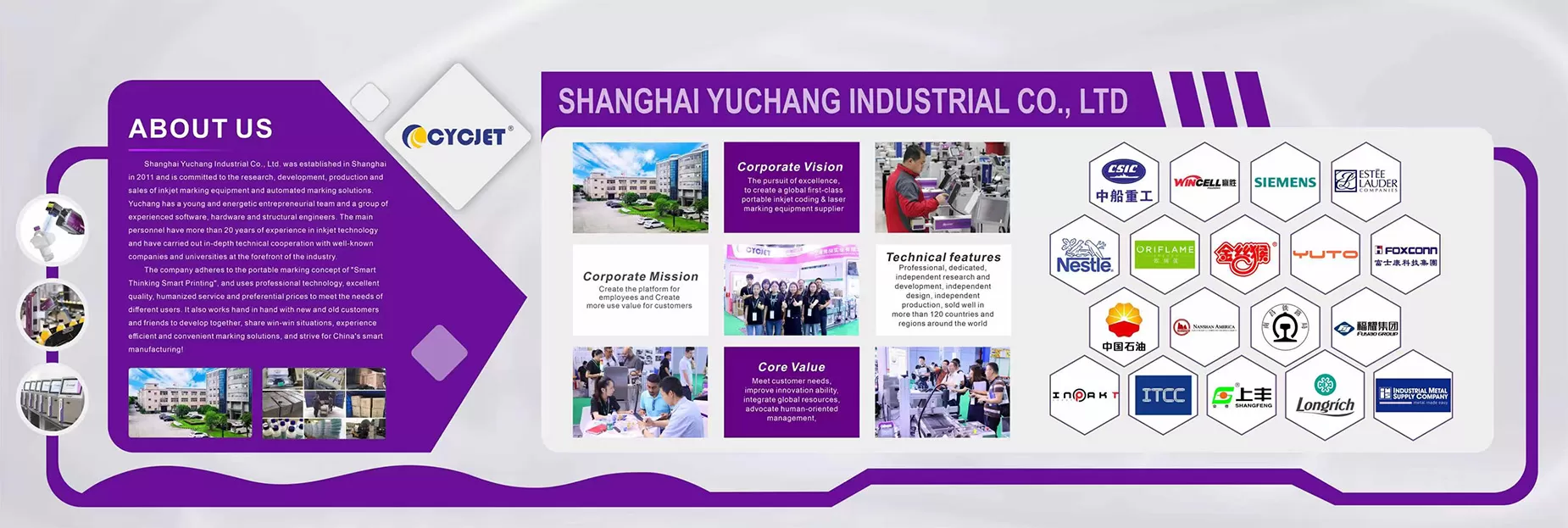
CYCJET is the brand name of Yuchang Industrial Company Limited. As a manufacturer, CYCJET have more than 19 years of experience for R& D different types of handheld inkjet printing solution, Laser printing solution, and portable marking solution, High Resolution Printing solution in Shanghai China.
Contact Person: David Guo
Telephone: +86-21-59970419 ext 8008
MOB:+86-139 1763 1707
Email: sales@cycjet.com
Web: https://cycjet.com/
Keywords :

WeChat QR code


